
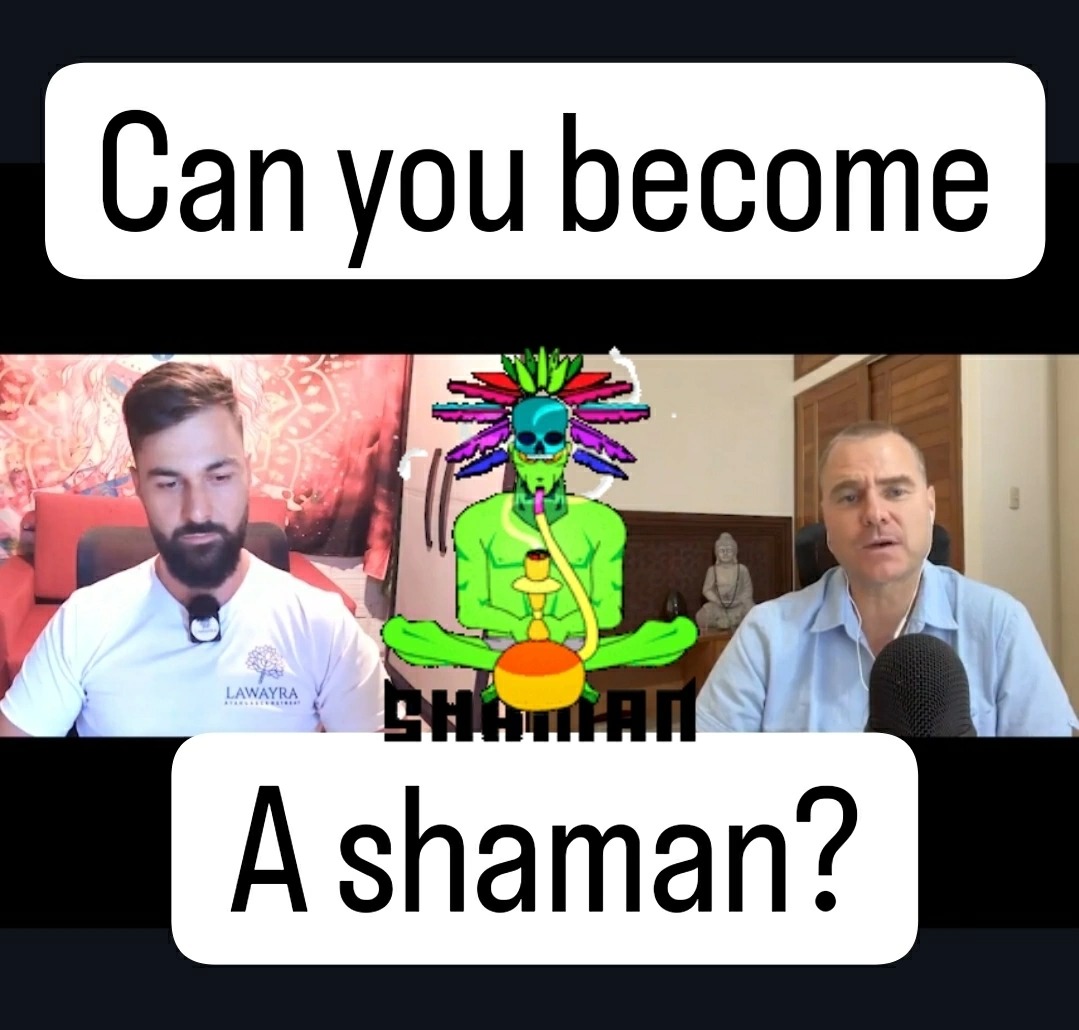
In a deep conversation with host Sam Believ, Hamilton Souther — a longtime practitioner and master-level shaman — lays out what it truly means to walk the path of shamanism: the calling, the apprenticeship, the responsibilities, and the inner work that goes far beyond drinking plant medicine.
A Call to the Jungle: How the Journey Begins
Hamilton’s journey began in his early 20s. After a period of inner turmoil and a sense of existential emptiness, he experienced what he describes as a “consciousness awakening.” Guided by dreams, meditations, and visions, he asked for direction and was led to the Amazon jungle. There, he met teachers and entered into a traditional apprenticeship — drawn not by curiosity, but by a felt call to learn, heal, and serve.
Though he was raised in a Western, achievement-oriented environment, Hamilton found that background helpful: it gave him a respect for discipline, education and dedication — qualities that would shape how he approached the path of plant-medicine and shamanic work.
Apprenticeship, Discipline & Earning the Title
According to Hamilton, becoming a true shaman isn’t a weekend transformation or a hobby. In his tradition, it requires years of training, tests of virtue, repeated ceremonies, and proving oneself. He reveals that when his teachers first had visions of him arriving, that wasn’t enough — they still required a long process of rites of passage, dietas (dietary and energetic cleansing), and life immersed in that world before granting acceptance.
When asked about how long someone needs to train before “serving medicine,” he outlines a multi-tier path: beginning as a sitter or coach (6–12 months), then facilitator (1–2 years), and only after a minimum of two years — and often more — as a shamanic facilitator able to guide others ceremonially. For what he calls “master facilitator,” training can stretch to several years, combining practical repetition, personal work, and deeper spiritual initiation.
It’s a process that demands respect: to the plants, to the tradition, to the lineage, and to yourself.
The Role of the Shaman: More Than Just Serving Tea
When Hamilton describes what a shaman does, it becomes clear this is not the same as a “guide.” A guide may organize a ceremony, lead songs or chants — but a true shaman embodies a whole other level: they know how to hold space energetically, understand the subtle dynamics of the medicine, and can interject their energy into the ceremonial field to support healing. They act as an intermediary — between spirit, medicine, and the human participants.
That role involves two layers: the tangible (preparing the medicine, managing the space, logistics) and the intangible (spiritual discernment, energetic sensitivity, healing intent). A well-trained shaman carries both. Hamilton says he was trained as both healer and intermediary, enabling him to adapt to different needs — whether guiding ceremonial space, supporting healing journeys, or holding safety when things get intense.
The Sacredness of Medicine, Ethics & Responsibility
For Hamilton, the difference between plant-medicine culture and “drug culture” is fundamental. He insists that ayahuasca and other medicinal plants should be treated with reverence, intention, and respect — not as recreational substances. The growing global interest in psychedelics makes this distinction more important than ever.
He warns against superficial “retreat tourism” or spiritual consumerism: the medicine becomes dangerous when misused by undertrained or dispassionate practitioners. As demand rises, so must standards: ethical training, transparent initiation, community care, and ecological responsibility (for example, sustainable cultivation rather than overharvesting).
At his center and academy, he supports a donation-based model with sliding scales and scholarship programs — reflecting the traditional Amazonian model where people give what they can, and the medicine remains accessible without commodifying spirituality.
Walking Between Two Worlds: Shaman & Westerner
Interestingly, Hamilton describes his life as a kind of “spiritual polymath.” Trained in shamanism, but also versed in modern science, social dynamics, and even technology — he bridges the Amazon’s ancestral wisdom and Western frameworks. It’s a balancing act: after years in the jungle, he now also runs retreats, writes, teaches, and communicates across cultures.
He says this duality is part of his path: to bring the medicine’s depth into a world that often values speed, efficiency, and external proof. But maintaining balance requires constant grounding — humility, honest self-reflection, and ethical clarity.
Is This Path for Everyone? A Reality Check
Hamilton is clear: shamanic life is not a weekend adventure. Not everyone is suited. He discourages romanticizing the “shamanic archetype.” It’s a path that demands willingness to go deep — emotionally, psychologically, spiritually — and sustain the work. People with serious psychiatric conditions or unstable health may be at risk.
He underscores that training must precede responsibility. Anyone wanting to “serve medicine” should commit to the journey: the apprenticeship, the healing of one’s own psyche, and learning respect for the plants and tradition.
The Invitation — If You’re Called
For those who feel a pull — a sense of calling, curiosity, longing for deeper healing — Hamilton extends an invitation with caution and care: come with humility, intention, and patience. Be ready to serve, to heal, to learn. Recognize this isn’t about status or power, but about honoring lineage, preserving sacred knowledge, and holding responsibility for others’ healing.
Shamanism, in his view, is not an identity you wear — it’s a responsibility you embody. And for those ready to walk that path, it can become an extraordinary way to connect human suffering — and human potential — with the infinite intelligence of nature, spirit, and consciousness.
Based on the Ayahuasca Podcast episode “How to become an Ayahuasca Shaman” with Sam Believ and Hamilton.

Sam Believ is the founder and CEO of LaWayra Ayahuasca Retreat, the best-rated Ayahuasca retreat in South America, with over 520 five-star Google reviews and an overall rating of 5 stars. After his life was transformed by Ayahuasca, he dedicated himself to spreading awareness about this ancestral medicine to help address the mental health crisis. Sam is committed to making Ayahuasca retreats affordable, accessible, and authentic, with a focus on care, integration, and the involvement of indigenous shamans. He is also the host of the Ayahuasca Podcast.